

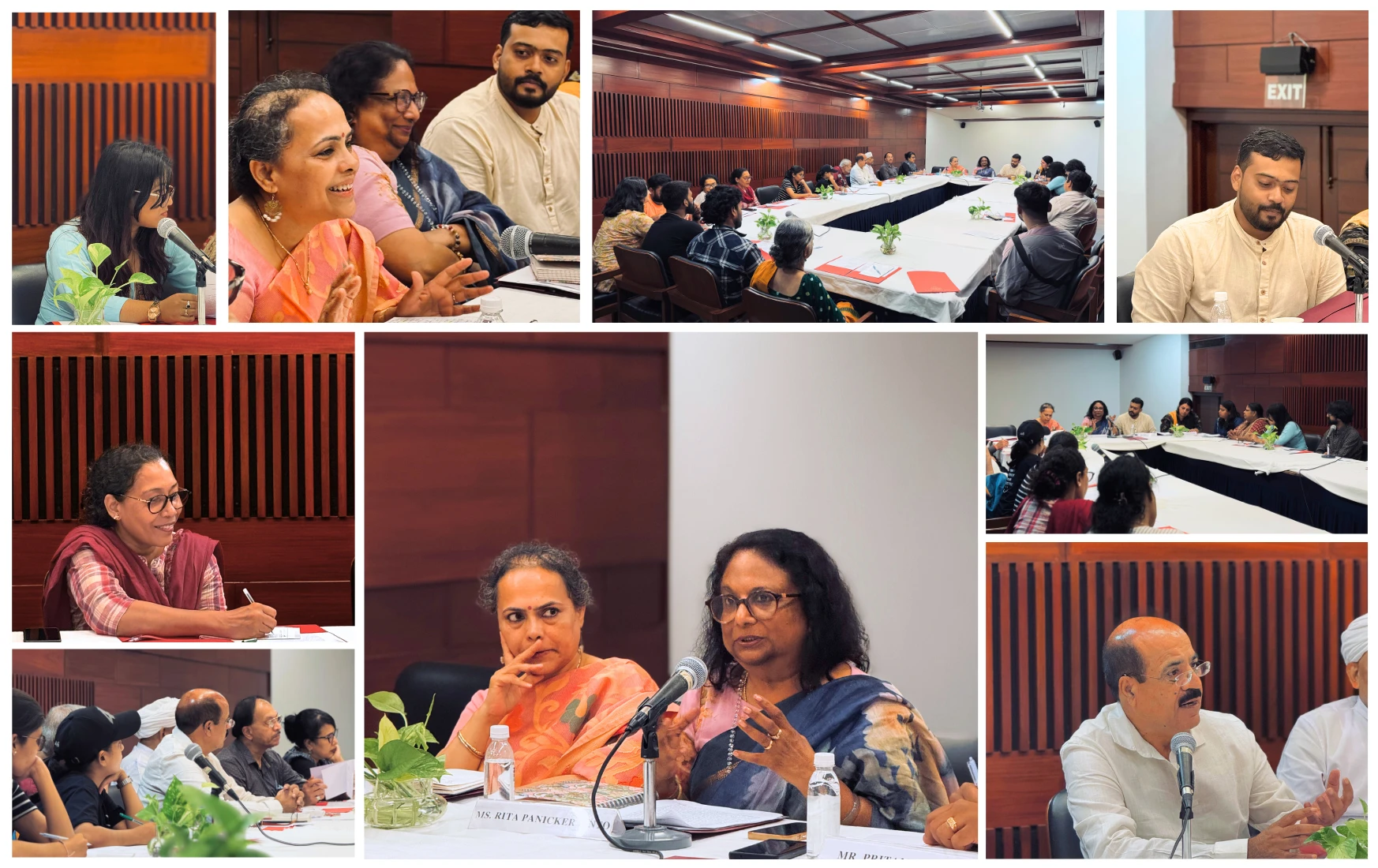

The Office of Public Affairs of the Bahá’ís of India convened a symposium on 30 August 2025 at the Bahá’í House of Worship on the theme “Action for Gender Equality: Begin at Home”. The event brought together practitioners, academicians, NGOs, and representatives of civil society to reflect on the role of the family as the seedbed of equality between women and men. Among the speakers were Ms. Rita Panicker Pinto, Executive Director of Butterflies NGO; Ms. V. Kalyani, Chairperson of Action India; and Mr. Pritam Nayak, Representative of the Office of Public Affairs of the Bahá’ís of India.
The discussion opened with reflections of the first speaker on the changing nature of families in contemporary society. Families are changing, yet deeply ingrained gender roles persist, with women bearing most caregiving and household responsibilities while fathers are often less involved. Children’s agency is frequently overlooked, highlighting the need to nurture both boys and girls and respect their well-being. Creative practices, such as engaging fathers through sports, fostering informal family conversations, and using non-violent communication, were shared. These incremental changes gradually shifted norms, fostering recognition that family life must be built upon respect, empathy, and shared responsibility.
The next speaker shared insights from decades of community work demonstrating how small shifts within families can lay the foundation for a larger change. Particular emphasis was placed on sexual and reproductive health education for both girls and boys, dismantling stigma, and fostering a culture of consent. Breaking the silence around these issues has allowed boys and young men to articulate their questions, confront misconceptions, and embrace responsibility in relationships. Intergenerational dialogues, whether between mother-in-law and daughter-in-law or between parents and children, have also been vital in exposing patriarchal dynamics and nurturing understanding.
The symposium also delved into the deeper conceptual foundations of gender equality which were shared by the last speaker. Equality of women and men as not merely a social goal to be achieved for the betterment of society, but rather a facet of human reality itself. Gender equality is not something artificially constructed to make society fairer; it is the recognition of what is already true, though often obscured or suppressed by entrenched structures. It was also emphasised that family that is self-enclosed risks fostering only self-serving loyalties, whereas an outward-looking family contributes to social well-being and becomes an arena for the practice of equality. Families through intimate association and an earnest desire to serve others, can create vibrant homes that nurture capable protagonists of societal transformation and engage in meaningful interactions with neighbours and friends.