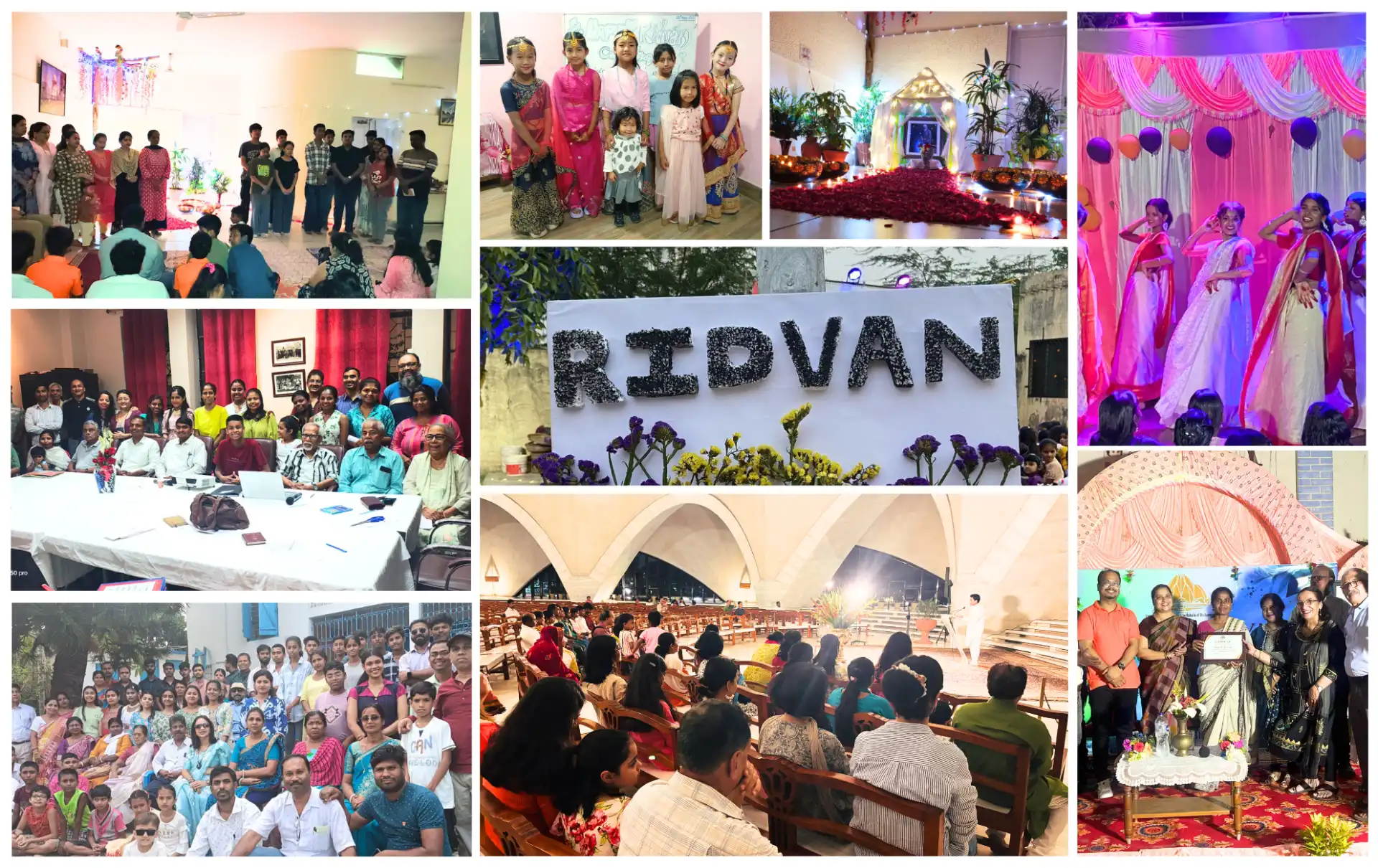

The Festival of Ridván, celebrated annually by Bahá’ís around the world, holds special significance as the commemoration of a pivotal moment in religious history. At the end of April 1863, shortly before departing from Baghdad for Istanbul, Bahá’u’lláh—the Prophet Founder of the Bahá’í Faith—spent twelve days in a garden by the River Tigris, which He named Ridván, meaning “Paradise.” It was there that He publicly declared Himself to be the One foretold by the Báb, a messenger who had prepared the way for a new divine teacher. Bahá’u’lláh’s declaration marked the beginning of His mission as the Manifestation of God for this age—ushering in a new era focused on the unity of humanity and the spiritual awakening of the human race.
Across India, this sacred festival was observed with reverence and joy through thoughtfully arranged gatherings. Spaces were adorned with rose petals and floral decorations, creating an atmosphere of beauty and serenity reminiscent of the original Ridván Garden. Through prayers, music, storytelling, and the reading of sacred texts, communities reflected on the spiritual significance of Bahá’u’lláh’s message and its relevance to the challenges facing humanity today. More than just a celebration, Ridván served as a time for individuals and communities to reflect on their role in contributing to the betterment of society.